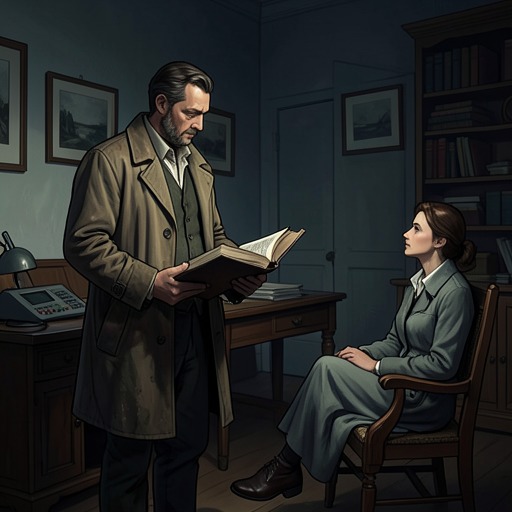
Nardo
I Know This Much Is TrueNardo is a stonemason and an associate of Giacomo Tempesta whose working relationship with the Tempesta family becomes a chain of obligations, resentments, and disputes over honor and property. In Domenico Tempesta’s account, Nardo first trains the youngest brother, Vincenzo Tempesta, then becomes the master Domenico is compelled to serve. Their relationship turns into bitter rivalry, and Nardo’s later role in the attempt to recover Giacomo’s gold medal extends that conflict across the family’s separations and losses.
Work and the Tempesta Family
When Vincenzo is ten, Giacomo sends him to apprentice with Nardo. Nardo reports the boy’s conduct to the family, describing him as idle and associating him with young men who cause trouble. Those reports have consequences at home: Giacomo disciplines Vincenzo, while Domenico recalls that their father sometimes punished both Vincenzo and Pasquale Tempesta, holding one responsible for what he had done and the other for what he had failed to do. Nardo is therefore not simply a tradesman outside the household; his routine reports help carry the father’s authority into the boys’ working lives.
A scandal at an estate abruptly breaks Nardo’s arrangement with Vincenzo. While Nardo is supervising masonry work on a courtyard and vineyard wall, he falls asleep during the afternoon. The magistrate and a visiting church official then discover Vincenzo involved in a scandalous encounter with the magistrate’s adult daughter. Nardo is dismissed, and both he and Vincenzo are banished from the property. The incident brings his apprenticeship of Vincenzo to an end, but not his connection to the family: Nardo immediately sets out to report what happened to Giacomo.
Domenico’s Forced Apprenticeship
To secure Nardo’s reinstatement as the magistrate’s mason, Giacomo visits the magistrate with wine and gives up his prized gold medal. Nardo, however, refuses to take Vincenzo back. The compromise falls on Domenico. Against his mother’s objections and the village priest’s protests, he is withdrawn from his studies for the priesthood and sent to work on the unfinished courtyard under Nardo. The apprenticeship is not a vocation Domenico chooses; it is the result of a bargain made by his father to preserve the family’s honor and restore Nardo’s employment.
Domenico describes the change as a painful descent from scholar to laborer. Over the months, masonry becomes the work imposed on him in place of his religious studies, and he says he hates the trade and longs to return to study. His account casts Nardo as the immediate figure of that unwanted future, but makes clear that Giacomo’s command and arrangement created the conditions of the apprenticeship. Nardo has authority over Domenico at work; Giacomo has authority over the decision that put him there.
Rivalry and Professional Conflict
The relationship becomes openly hostile after a confrontation at work. Domenico recounts that an insult led to an exchange of spit and then a fistfight. Nardo used a trowel against him, leaving a small scar on Domenico’s left hand. Afterward, the two men were bitter enemies and rivals. The scar gives the quarrel a lasting physical trace, while the memoir’s emphasis on the encounter also turns it into a defining episode in Domenico’s account of Nardo.
Their conflict continues beyond the immediate fight. Domenico says that work for a mason was scarce in Giuliana and that Nardo spread damaging claims about his craftsmanship. For the next two years, projects that Domenico believed should have gone to him instead went to Nardo. The memoir presents the dispute as both personal and economic: a hostile relationship in the workshop affects Domenico’s ability to earn work, and professional competition gives the feud consequences beyond wounded pride. Domenico’s explanation is openly partisan, attributing Nardo’s conduct to hostility toward his own supposed superiority; this is the narrator’s judgment, not an independent account of Nardo’s motives.
The Medal and Nardo’s Later Role
After Vincenzo’s death, Domenico writes to his mother with the news. Two or three weeks later, he receives a postcard from a representative of Nardo reporting that his mother has died of malaria. Domenico responds by asking Nardo to negotiate with the magistrate for the return of Giacomo’s gold medal, which he considers his rightful inheritance as the firstborn son. The medal links Nardo to the earlier bargain: Giacomo surrendered it to secure Nardo’s reinstatement, and Domenico now seeks its return as both family property and a matter of justice.
Nardo does not answer. Domenico writes twice more and receives no reply. This final account leaves the medal unrecovered and Nardo’s side of the dispute unheard. Across the episodes, he is associated with practical authority over apprentices, the family’s costly attempt to restore his employment, the breakdown of Domenico’s working life, and an unresolved claim to inherited property. Because all of these details come through Domenico’s retrospective memoir, Nardo appears chiefly as the antagonist in a story shaped by the narrator’s grievances; the narrative supplies the actions and consequences but does not give Nardo an independent account of them.